


























This April, stargazers can look forward to the annual Lyrids Meteor Shower as it graces Singapore’s night sky from 17 to 26 April. Peaking on 22 to 23 April, don’t miss out on the opportunity to witness streaks of light and colour from meteors burning through Earth’s atmosphere.
Observers may see 10 – 20 meteors per hour during its peak, though occasional bursts may produce more. The best viewing time is after 11pm, at locations such as parks, beaches, reservoirs, or open spaces away from city lights. No special equipment is needed, and observers are advised to find a comfortable spot with an unobstructed view, preferably facing the east.
In anticipation of this phenomenon, Science Centre Observatory has put some FAQs, to address various questions on the phenomenon and share more about its origins.
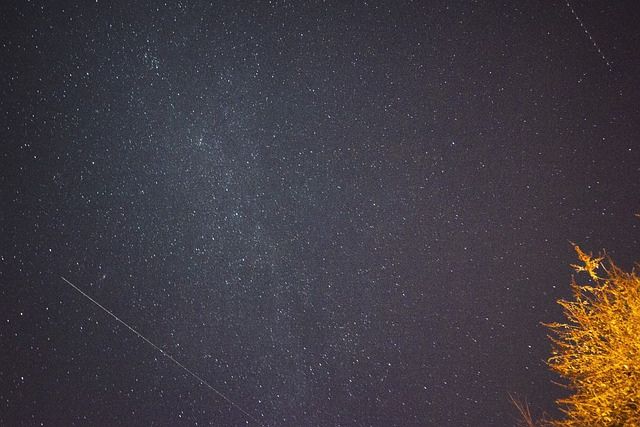 Image credit: Pixabay
About Meteor Showers
1. What are meteors and where do they come from?
Meteors are rocks that enter Earth’s atmosphere at speeds that cause the gases around them to glow and burn up. These are the streaks of light that one may see going across the sky in a matter of seconds. They are also often referred to as “shooting stars”.
Meteoroids are within our solar system. They can originate from various sources – such as comets, asteroids, and other planets.
2. What is the difference between a meteor, a meteorite, and a meteoroid?
A meteoroid is an asteroid that is less than one metre in width. When the meteoroid enters Earth’s atmosphere, it becomes a meteor. If a part of the meteor survives its journey through the Earth’s atmosphere and lands on the Earth’s surface, it is called a meteorite.
3. What is a meteor shower and how often do they occur?
A meteor shower is a celestial event in which a number of meteors are observed to radiate or come from one point in the night sky. Meteor showers are formed when the Earth travels through a cloud of interplanetary debris left behind from the tail of a comet or asteroid that has thrown out large amounts of materials.
While the Earth orbits the Sun and crosses into these dust streams or debris trails, the materials collide into Earth’s atmosphere and burn up, leaving a streak in the sky which is what we see as meteors.
Earth goes through these dust streaks every year, so we can predict when these meteor showers happen on an annual basis.
Lyrids Meteor Shower taking place this April
1. What is the Lyrids meteor shower?
The Lyrids meteor shower is one of the oldest known meteor showers. The first recorded sighting of a Lyrids meteor shower dates back to 687 BC in China. The Lyrids meteor shower occurs when Earth crosses the trail of debris left by Comet C/1861 G1 Thatcher (Comet Thatcher). These debris left by Comet Thatcher disintegrate in Earth’s atmosphere, producing streaks of light and colour in our sky.
2. Why is this meteor shower called Lyrids?
Meteors in annual showers are named after their radiant point – the location in the sky where they seem to originate. The Lyrids meteor shower gets its name from their radiant point near the constellation Lyra, the harp.
3. When will the Lyrids meteor shower take place?
The Lyrids meteor shower is active between 17 to 26 April and will peak from 22 to 23 April. They are best viewed after 11pm, when the environment and sky is as dark as it can get.
4. How often does the Lyrids meteor shower take place?
The Lyrids meteor shower is an annual event that peaks in late April every year. Typically, 10-20 Lyrid meteors can be seen per hour during their peak, but they are also known for occasional surges, when up to 100 meteors can be seen per hour. These rare outbursts occur approximately every 60 years because of gravitational influences from planets reshaping the debris trail left by Comet Thatcher. The next Lyrids outburst is expected in 2042.
5. What can we expect to see during the Lyrids meteor shower?
During the peak of the Lyrids meteor shower, observers can expect to witness 10-20 fast and bright meteors traversing the night sky per hour. While Lyrid meteors typically do not leave prolonged dust trails, they occasionally generate exceptionally bright flashes known as fireballs, enhancing the spectacle of the event.
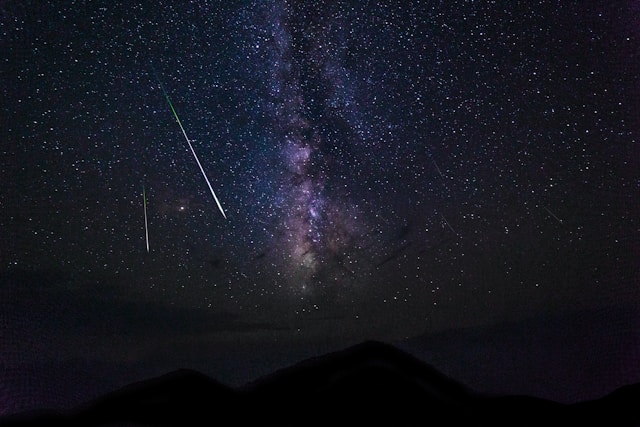 Image credit: Unsplash
6. How can I get the best view of this occurrence in Singapore?
Observers should seek darker locations such as parks, beaches, reservoirs, or open spaces away from city lights. For the best view, find a comfortable, safe spot and look up for an unobstructed view of the sky, preferably facing the east.
Singapore’s light pollution, weather conditions and frequent cloud cover can also affect visibility of this occurrence. As such, observers should also check the weather forecast for clear skies.
7. Is any special equipment required to view this?
No special equipment is required to view this meteor shower as the Lyrids will be visible to the naked eye.
8. Will the Science Centre Observatory (SCOB) hold a viewing session for the Geminid meteor shower?
The Observatory at Science Centre Singapore will not be holding a specific viewing session for this meteor shower. However, on selected Fridays, astronomy enthusiasts can take part in stargazing sessions held by The Observatory for a unique chance to explore the solar system and observe stars and planets up close through a telescope.
Contributed by Science Centre Observatory.
💐👩👧👦 MOTHER’S DAY 2026 👩👧👦💐
Mother’s Day is just around the corner! Treat Mum to a well-deserved celebration—explore our curated list of Mother’s Day dining spots, thoughtful Mother’s Day gifts, and beautiful Mother’s day cakes to make her day extra special.

🎭🎪 JUNE SCHOOL HOLIDAY 2026 🎪🎭
Welcome to the June school holidays! Make the most of the break with your little ones – explore our curated list of fun, engaging, and family-friendly activities happening across Singapore during the June School Holidays in Singapore 2026.

* * * * *
Looking to reach over 100,000 parents in Singapore? Let us amplify your message! Drop your contact details here, and we’ll reach out to you.
Discover exciting family-friendly events and places to explore! Join our Telegram and Instagram for curated parenting recommendations.