






















ARTSCIENCE MUSEUM PRESENTS A FESTIVAL ON THE FUTURE OF TECHNOLOGY
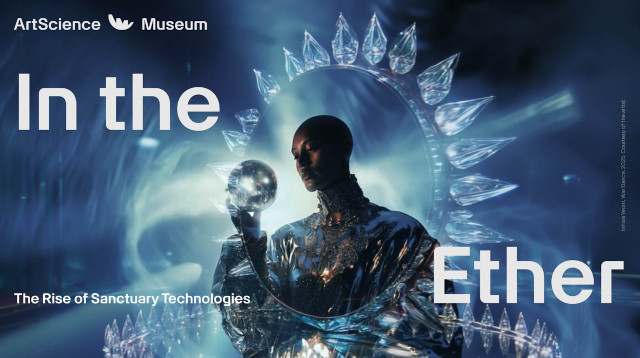
The third edition of In the Ether, a complimentary festival, brings together international artists, researchers and Ethereum co-founder Vitalik Buterin to explore how innovation can foster creativity and connection
ArtScience Museum invites visitors to step into In the Ether – The Rise of Sanctuary Technologies, a landmark festival exploring how technology can be reimagined to support human flourishing and collective care. Presented from 3 October to 6 December 2026, the complimentary festival transforms the Museum into a dynamic platform for discovery, featuring interactive artworks, participatory installations, talks, workshops and learning experiences that challenge visitors to rethink the role technology plays in shaping lives and communities.
As artificial intelligence and digital technologies become more embedded in how people communicate, find information and make decisions, In the Ether examines how technology might serve people more meaningfully. The festival explores the idea of “sanctuary technologies” – technologies, practices and experiments designed to expand individual agency, encourage responsible knowledge-sharing and strengthen collective wellbeing.
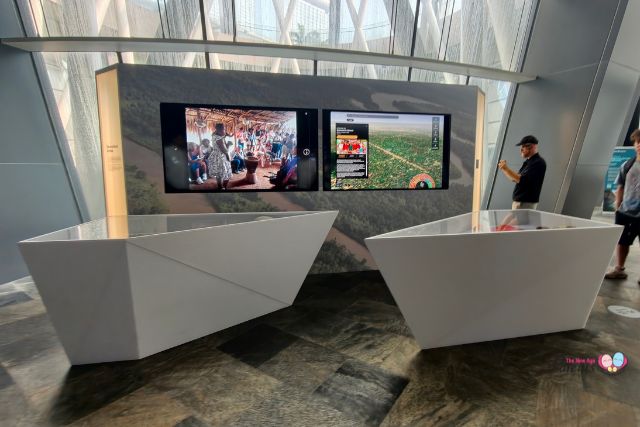
The third edition of In the Ether, ArtScience Museum’s flagship festival examining the relationship between science, technology and society, brings together an international network of artists, researchers, engineers and practitioners working at the forefront of technological innovation. Key contributors include non – profit organisation Vensa and Ethereum co-founder Vitalik Buterin, whose ideas around open – source and decentralised technologies form an important part of this year’s programme.
“As technology becomes ever more embedded in our daily lives, it is increasingly important that we understand not only what these systems do, but how they shape the way we live, connect and make decisions. In the Ether creates space for curiosity, dialogue and critical reflection, inviting visitors to uncover the human choices behind technological innovation and imagine futures where technology is designed with greater care, agency and collective wellbeing in mind,” said Angelita Teo, Vice President of Attractions at Marina Bay Sands.
“We need a technological future that protects our dignity and agency – where we can meaningfully shape technology, not just consume it. Open infrastructure we can study and understand is the first step. Microchips shape almost all parts of modern life, yet few of us can design one or verify what is inside. Open silicon can change that. At In the Ether, visitors can explore how chips work, design their own, and take it home,” said Vitalik Buterin, co-founder of Ethereum.
Structured around three interconnected chapters – Imagine, Investigate and Experiment – the festival combines artistic inquiry, scientific research and hands – on exploration to reveal the choices, values and infrastructures that shape contemporary technologies.
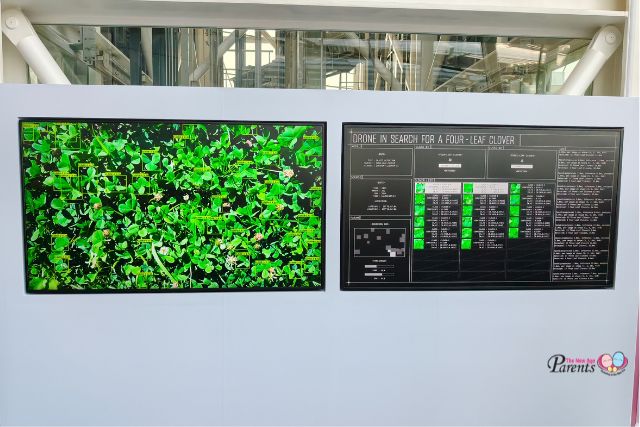
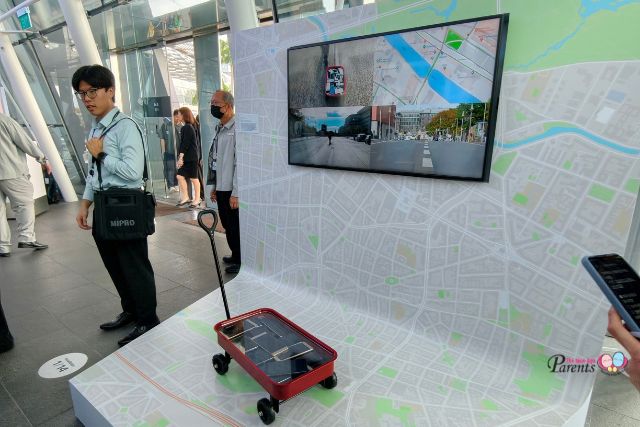
The journey begins with Imagine, which explores the assumptions, values and choices embedded within everyday technologies. Highlights include War Dance by Inhwa Yeom (South Korea), which uses AI – generated imagery and Korean mythology to examine bias and representation in artificial intelligence; Drone in Search for a Four – Leaf Clover by Sputniko! (Japan), where image – recognition software transforms a childhood search for luck into an automated task; and Google Maps Hacks by Simon Weckert (Germany), in which the artist placed 99 smartphones in a metal wagon and pulled them through the streets of Berlin. Visitors can also discover d/acc, an installation developed with Vensa that introduces a technological philosophy developed by Vitalik Buterin, exploring approaches to innovation that prioritise openness, resilience and social benefit.
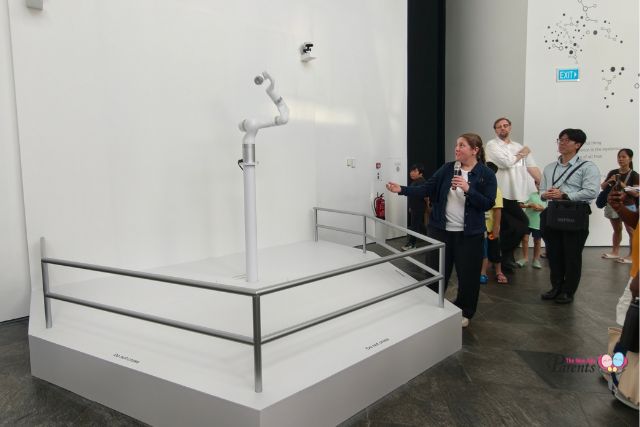
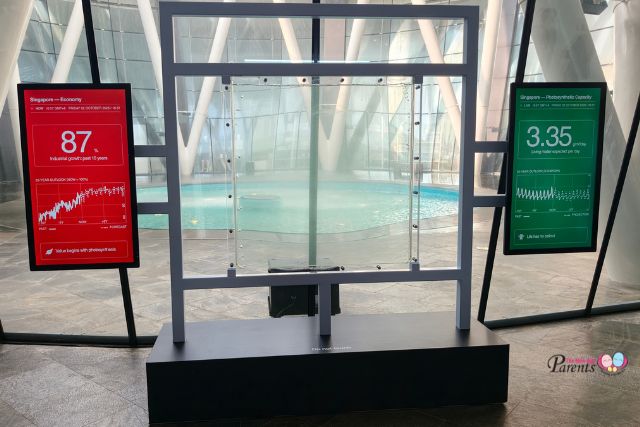
Investigate explores how technology influences societies, cultures and everyday life. The chapter combines artistic practice, scientific research and speculative design projects that reveal the often unseen systems underpinning the digital world. Featured works include Anatomy of an AI System by Kate Crawford (Australia) and Vladan Joler (Serbia), an acclaimed visual investigation tracing the vast human, material and environmental infrastructure behind artificial intelligence, and Mimus by roboticist and artist Dr Madeline Gannon (United States), an interactive robotic installation that explores the surprisingly emotional relationships people develop with machines. Meanwhile, The Solar Share by DISNOVATION.ORG (France) imagines an alternative economic model built around biological productivity using sunlight – grown spirulina as a speculative form of currency.
Singapore – based research is also featured prominently throughout the festival. Visitors can explore student projects that apply technology to real – world health and accessibility challenges, supported by the Singapore University of Technology and Design’s DIVE (Design·AI Innovation and Venture Exploration) platform.
The final chapter, Experiment, shines a spotlight on microchips. A key highlight is the Open Chip Lab by Vensa, where visitors can discover how chips are designed, fabricated and studied beyond large industrial settings. Developed with contributors including Matthew Hartensveld (United States), Matt Venn (Spain) and Andrew D. Zonenberg (United States), the installation demystifies semiconductor technology through open – source chip design platforms, silicon wafers and microscopic explorations of everyday electronics.
At a time when digital technologies play an increasingly central role in everyday life, In the Ether offers a timely opportunity to explore the systems shaping our future. Bringing together art, research and experimentation, the festival invites audiences to imagine technology as something that can be shaped collectively and designed around human needs and values.
In the Ether – The Rise of Sanctuary Technologies runs from 3 October to 6 December 2026 at ArtScience Museum. Admission is free. For more information on the festival, visit here.
Festival Chapters and Highlights
1: IMAGINE
Imagine explores everyday choices through the lens of art, examining the values and assumptions that can be built into technologies. Alongside the artworks, this chapter introduces alternative ideas emerging from technology communities, opening conversations about how technology could be designed differently.
In Drone in Search for a Four-Leaf Clover, Japanese artist Sputniko! uses a drone and image-recognition software to search a field for four-leaf clovers. The work prompts visitors to consider whether every part of life needs to be optimised, and what may be lost when everyday experiences become increasingly automated.
Drawing on the Korean myth of the Sun and Moon Dogs, creatures said to cause eclipses, Korean artist Inhwa Yeom uses imagery generated by artificial intelligence in War Dance to bring an ancient story into the present. Through its portrayal of Asian women as Bul-gae, War Dance explores how artificial intelligence trained on existing data, images and cultural narratives can reproduce and amplify existing societal biases.
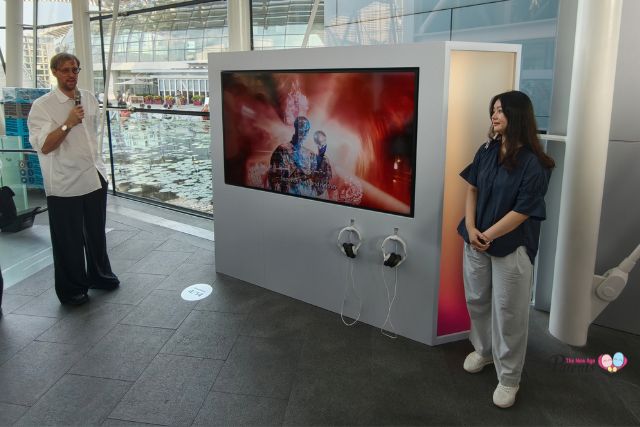
In Google Maps Hacks, German artist Simon Weckert placed 99 smartphones in a metal wagon and pulled them through the streets of Berlin. The combined location data led Google Maps to register temporary traffic congestion and redirect drivers to other routes. By demonstrating how easily the information behind a digital platform can be influenced, the installation prompts visitors to consider how much trust they place in the systems that guide their everyday decisions.
Meanwhile, d/acc introduces a philosophy of technology developed by Ethereum co-founder Vitalik Buterin. Presented by Vensa, a non-profit organisation supporting the development and adoption of open-source technologies, the display considers how technological progress might better support people, communities and society.
2: INVESTIGATE
Investigate brings together research, engineering, design and art to examine technology from different perspectives. The chapter encourages visitors to consider how technologies can be designed in ways that place people and communities at their centre.
Created by roboticist and American artist Dr Madeline Gannon with her research studio ATONATON, Mimus transforms an industrial robot arm into an interactive installation that responds to the presence and movements of visitors. The work explores how people attribute human qualities to machines and how simple interactions can evoke emotional connection.
At the heart of The Solar Share by DISNOVATION.ORG is a one-square-metre bioreactor that uses sunlight to grow spirulina, an edible microalga rich in protein. Treating its daily harvest as a form of currency, the project imagines a future where value is measured not only by financial wealth, but also by the ability to generate food and other essential resources.
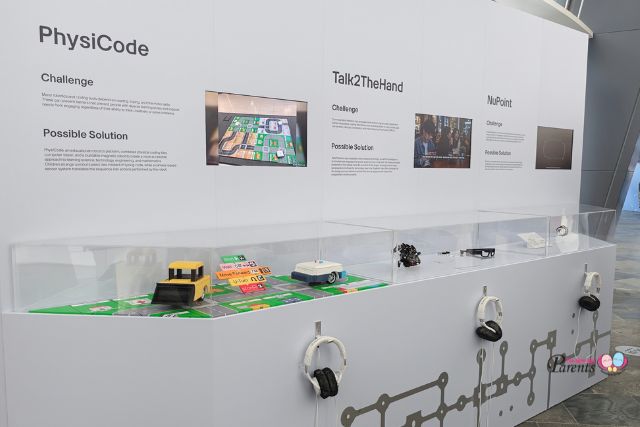
Developed by student teams from SUTD’s Design·AI Innovation and Venture Exploration (DIVE) platform, these projects – NuPoint, PhysiCode and SignBridge – explore how technology can be applied to real-world health and accessibility challenges. Through research and experimentation, the teams have created human-centred solutions aimed at improving stroke rehabilitation outcomes (NuPoint), providing neurodivergent students access to STEM education (PhysiCode), and supporting communications between sign language users and non-signers (SignBridge).
3: EXPERIMENT
Experiment explores the history of the microchip and the skills, tools and processes behind its creation. By showcasing examples of independent chip-making, the chapter demonstrates that even one of the most sophisticated technologies in the world can become accessible to hands-on learning and experimentation.
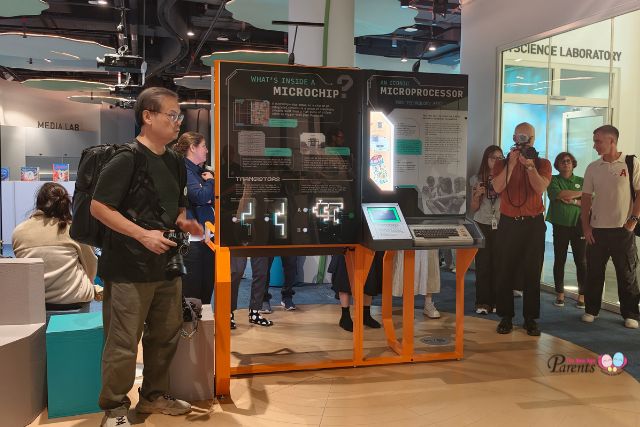
Presented by Vensa, Open Chip Lab explores how microchips can be made, designed and understood beyond large industrial facilities. Through the work of Matthew Hartensveld (United States), Matt Venn (Spain) and Andrew D. Zonenberg (United States), the workshop challenges the idea that chipmaking is only possible in high-tech factories, showing how people can learn about, experiment with and even create their own microchips.
It’s the weekend and are you looking for things / activities to do? Check out our weekly roundup of things to do this weekend.

For other upcoming events, visit Events in Singapore.
* * * * *
Looking to reach over 100,000 parents in Singapore? Let us amplify your message! Drop your contact details here, and we’ll reach out to you.
Discover exciting family-friendly events and places to explore! Join our Telegram, Instagram and Tik Tok for curated parenting recommendations.