




























One of the year’s most anticipated celestial events, the annual Perseid Meteor Shower, is set to return this month and peak overnight from 12 – 13 August 2026.
During this time, Earth passes through a trail of debris left behind by Comet 109P/Swift-Tuttle, and the particles enter the atmosphere at extremely high speeds, typically around 36 miles per second, resulting in bright streaks of light in the night sky. Widely regarded as one of the most spectacular meteor showers of the year, observers may see up to 100 meteors per hour under ideal conditions, although actual numbers in Singapore are typically lower due to light pollution and cloud cover.
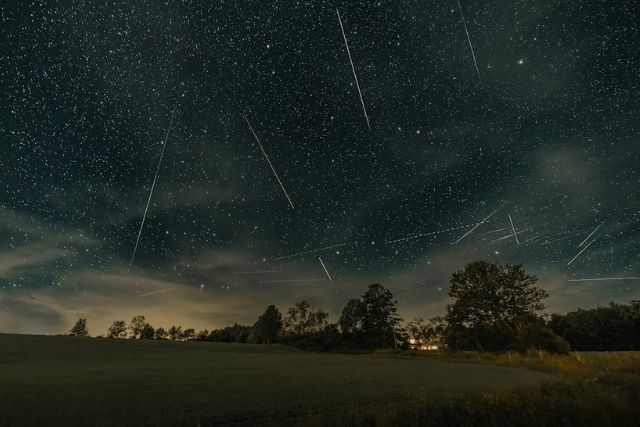 Image: Unsplash
1. What is the celestial event happening on 12-13 August?
The Perseids Meteor Shower is an annual meteor shower that is active from mid-July to late August. In 2026, the Perseid Meteor Shower is expected to peak overnight on 12-13 August.
The event occurs when Earth passes through a trail of debris left behind by Comet 109P/Swift-Tuttle. As comets approach the Sun, they heat up and shed dust and
fragments. When Earth passes through this debris, the particles enter the atmosphere at extremely high speeds, typically around 36 miles per second for Perseid meteors. The intense compression and heating of the air causes the particles to burn up, creating the bright streaks of light in the sky.
Under dark skies and ideal viewing conditions, observers may see up to 100 meteors per hour. Actual numbers in Singapore are usually lower due to light pollution and frequent cloud cover.

2. How did the Perseids Meteor Shower get its name?
Meteor showers are named after the constellation from which the meteors appear to originate, known as the radiant. The Perseids Meteor Shower derived its name from
the constellation Perseus, where the Perseids appear to radiate from this region of the sky, though their true origin lies elsewhere in space.
3. What time will the Perseids Meteor Shower be visible in Singapore?
In Singapore, the Perseids are best observed between 3.00 a.m. and 6.00 a.m., during which the constellation from the meteors appear to radiate rises sufficiently
above the horizon, making the shower easier to observe.
No special equipment is required to see the Perseids Meteor Shower in Singapore.
Simply allow your eyes about 20–30 minutes to adjust to the darkness for the best chance of spotting meteors.

4. Why are the Perseids considered one of the best meteor showers of the year?
The Perseids are widely regarded as one of the year’s most impressive meteor showers due to their relatively high meteor rates, bright meteors and frequent fireballs, making them one of the most spectacular meteor showers of the year.
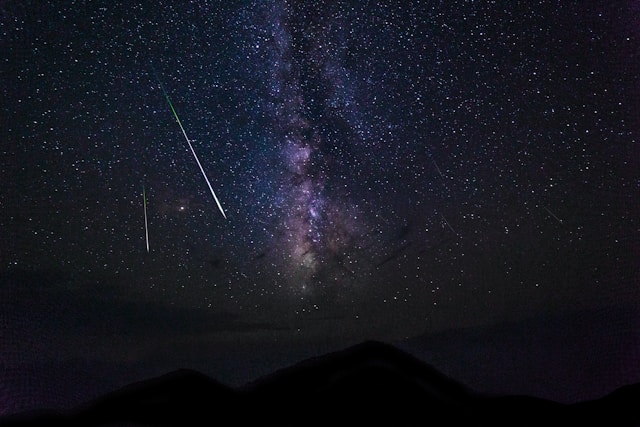 Image: Unsplash
5. How often do meteor showers occur?
Meteor showers are formed rather frequently when the Earth travels through various clouds of interplanetary debris left behind from the tail of comets or asteroids that have thrown out large amounts of materials. The denser the debris clouds are, the more materials will fall on Earth, thus giving us more meteors. Meteors are made of bits of rocks and ice ejected from comets or asteroids.
While the Earth orbits the Sun and crosses into these dust streams or debris trails, the materials collide into Earth’s atmosphere and burn up, leaving a streak in the sky which is what we see as meteors.
6. What are the best places to view the Perseids Meteor Shower?
The best viewing locations are areas with minimal artificial lighting and an unobstructed view of the sky. In Singapore, suitable locations include parks, beaches
and reservoirs that are away from city lights, such as East Coast Park, Changi Beach Park, West Coast Park, Marina Barrage or the Southern Ridges. Regardless of
location, viewers should avoid looking at bright screens before observing and allow their eyes time to adapt to the dark.
7. Can the meteor shower be viewed with the naked eye?
Yes. Meteor showers are best viewed with the naked eye, as telescopes and binoculars have a limited field of view and may cause observers to miss meteors streaking across different parts of the sky. Simply find a dark location, look broadly across the sky rather than directly at Perseus, and be patient.

8. When is the next time we will be able to see a meteor shower in Singapore?
Following the Perseids, the next major meteor shower visible in Singapore is the Geminids Meteor Shower, which is active from late November to December, and typically peaks around 13-14 December.
Contributed by Science Centre Observatory.
September School Holiday 2026
It is the one-week September school break. Do check out our compilation of exciting September School Holidays Activities 2026 in Singapore.
Mid-Autumn Festival falls on 25 September this year. Remember to check out our list of Best Mooncakes and Best Bak Kwa in Singapore 2026.

Looking for what to do during the Mid-Autumn Festival? Read Mid Autumn Festival 2026 Events in Singapore.