





























THE COLOURS AND LUSH GARDENS OF ANCIENT EGYPT COME TO LIFE IN THE FIRST EGYPT-THEMED FLORAL DISPLAY AT GARDENS BY THE BAY
More than 7,000 lilies take centre stage in Lilytopia, including the rarely seen Egyptian blue waterlily as well as giant Victorian waterlily varieties
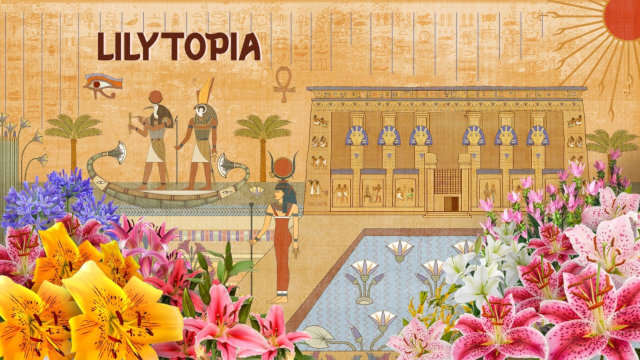
The image of Egypt that comes to mind for many is one of vast sandy dunes and massive stone monuments. Yet thousands of years ago, colour was everywhere. Temple walls were adorned with hieroglyphs painted in vivid mineral and botanical pigments, while lush gardens flourished along the Nile. Lilytopia (百合乌托邦), Gardens by the Bay’s first floral display inspired by Ancient Egypt, brings this vibrant world to life, inviting visitors to step into a landscape where colour, nature and mythology intertwine.
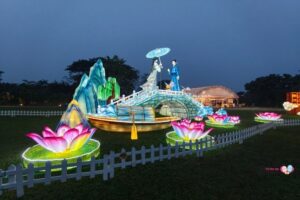
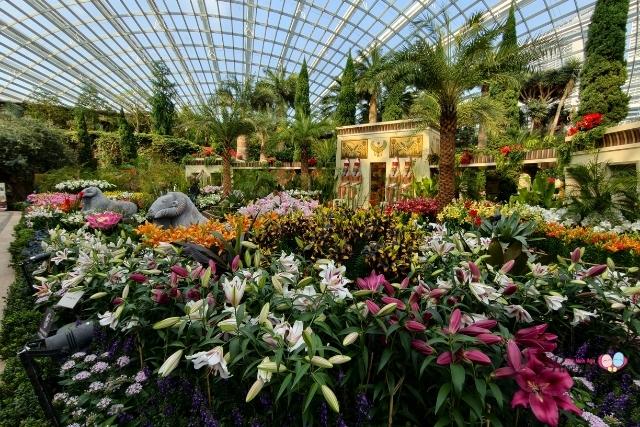
Amidst a recreated landscape now lost to time, there are more than 7,000 lilies representing 46 species and varieties, from fragrant garden lilies in a spectrum of colours, to the sacred Egyptian blue waterlily, to giant Victoria waterlilies.
Presented in collaboration with the Embassy of the Arab Republic of Egypt in Singapore, Lilytopia marks 60 years of diplomatic relations between Singapore and Egypt. Acting Minister-in-charge of Muslim Affairs and Senior Minister of State for Defence Mr Zaqy Mohamad launched the floral display today. Lilytopia runs until September 27.

Gardens by the Bay CEO Mr Felix Loh said, “Ancient Egyptian civilisation was rich with verdant gardens and vividly painted art, and Lilytopia recreates this lesser-known world through a breathtaking landscape of lilies, inviting visitors to discover how closely the Nile and nature were woven into daily life. As we commemorate 60 years of diplomatic relations between Singapore and Egypt, we are excited to revive the intriguing beauty of an enchanting era of Egyptian history through horticulture, right here in Singapore.”
Walk through a formal Egyptian garden of before
At the heart of Lilytopia is Gardens by the Bay’s interpretation of a formal ancient Egyptian garden. Such gardens were often walled and rectangular, with a central pool containing fish and aquatic plants. Lilytopia’s pond also pays tribute to the Nile, whose waters nourished fertile land and sustained agriculture, communities and gardens amid Egypt’s arid landscape.
The pond brings together plants that share the “lily” name. The Egyptian blue waterlily (Nymphaea caerulea) was closely associated with ancient Egyptian garden pools. Its flowers close at night and reopen with the morning sun, a daily cycle that made it a symbol of creation and rebirth. One of the most common plant motifs in ancient Egyptian art, it also appeared on temple offerings and tomb furnishings.
Giant waterlilies Victoria amazonica and Victoria cruziana make their debut in a Flower Dome floral display. These South American plants are among the largest members of the waterlily family and were grown in-house by Gardens by the Bay’s research team from seed over the past year and a half.
More than 40 varieties of garden lilies add colour and fragrance. Highlights include these cultivars which are making their debut:
- Lilium ‘Tiny Massive’, a compact Asiatic lily with striking yellow petals and dark centres
- Lilium ‘Tropical Dragon’, an unusual lily with narrow, curled lime-green petals edged and streaked in vivid pink, giving its blooms a spiky, sculptural form resembling a dragon fruit.
- Lilium ‘White Triumph’, an Asiatic lily prized for its striking flowers and elegant fragrance. Its large, showy, pure-white blooms are complemented by lush, dark green, sword-like foliage.

Plants closely associated with the landscapes and daily life of Egypt, including ginger, pomegranate, and papyrus, complete the Egyptian garden. During ancient times, the soft inner pith of papyrus stems were cut into strips, arranged in perpendicular layers, then pressed and dried to form a writing surface that carried records, literature and letters across the ancient Mediterranean. The plant’s name “papyrus” also gave rise to the word “paper”.
Monuments interpreted in full colour
A 4.5m-tall façade inspired by the Great Temple of Abu Simbel in southern Egypt anchors the display. It recreates the four colossal, seated statues of King Ramesses II that dominate the original rock-cut temple, which he commissioned around 1264 BC.
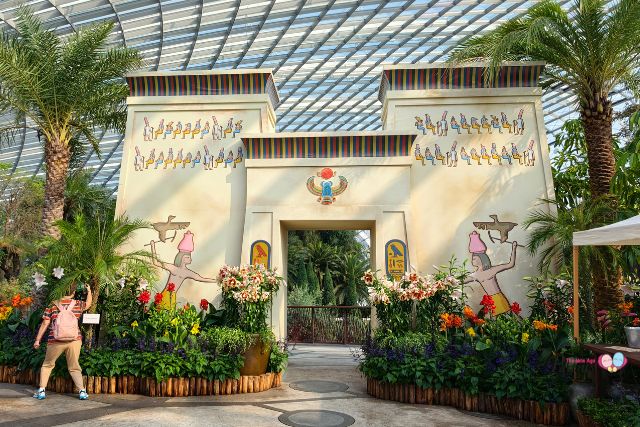
Colourful hieroglyphs on the walls and columns draw inspiration from the Temple of Hathor at Dendera, one of Egypt’s best-preserved temple complexes. Its surviving painted carvings and plant motifs offer a glimpse of the vivid palette that once adorned Egypt.
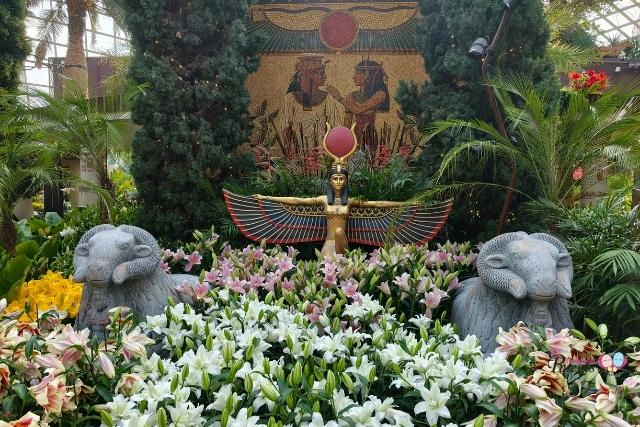
Towering statues throughout the floral display introduce visitors to some of Egypt’s many deities, including Hathor, goddess of music, joy and motherhood; Ra, the sun god; and Thoth, god of the moon, wisdom and writing.
Other highlights include architecture inspired by the Temple of Edfu; a solar barque, which Egyptians believed carried the sun god Ra across the sky; and traditional irrigation tools used to lift water, including the shaduf and Archimedes screw.
Free plant giveaway
To mark the opening of Lilytopia, visitors to Flower Dome can take home a complimentary air plant from today until August 25. Visit to find out more details. Limited to one plant per visitor and while stocks last.
📅 21 Aug to 27 Sep 2026
🕙 9am – 9pm
📍 Flower Dome
🏷 Admission charge to Flower Dome applies
You can also get tickets via Klook, Fever, Pelago and KKday.
For more information, visit here.
September School Holiday
It is the one-week September school break. Do check out our compilation of exciting September School Holidays Activities 2026 in Singapore.

* * * * *
Looking to reach over 100,000 parents in Singapore? Let us amplify your message! Drop your contact details here, and we’ll reach out to you.
Discover exciting family-friendly events and places to explore! Join our Telegram channel for curated parenting recommendations.